Are the Lakers Better Without LeBron James? Analyzing the Numbers and Offensive Hierarchy
Recent wins without LeBron James have reignited the debate: do the Los Angeles Lakers function better without LBJ? An analysis through statistics, offensive dynamics, and future outlooks



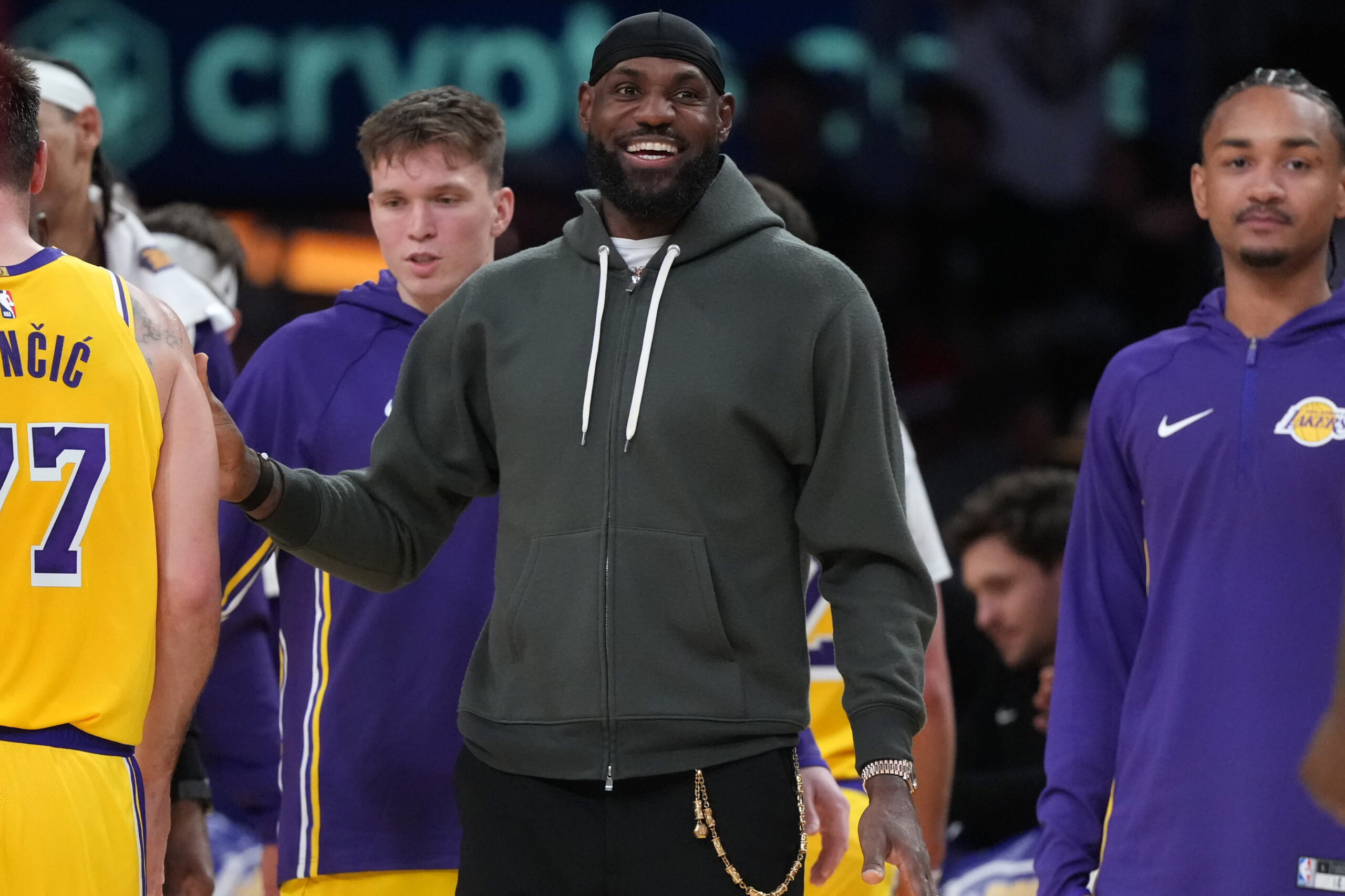
Do the Lakers actually play better without LeBron James, rather than with him? Is it a real trend or simply an impression created by temporary circumstances? And is it something the franchise should seriously evaluate heading into next season?
While rumors circulate about a possible five-year, $240 million extension for Austin Reaves, which would make him a cornerstone of the future alongside Luka Doncic, the purple and gold remain fully involved in the race for third place in the Western Conference.
A position that would allow coach JJ Redick’s team to avoid facing the Oklahoma City Thunder in the first two rounds of the postseason.
Meanwhile, with LeBron James sidelined to manage a physical issue, the Lakers picked up two significant home wins against the New York Knicks and the Minnesota Timberwolves.
Two victories built on great offensive fluidity and, above all, the defensive aggressiveness the team had searched for all season but rarely displayed earlier in the year.
In the following game against the Chicago Bulls, with James returning, the defense once again allowed a lot – 130 points conceded – while the offense produced an almost perfect distribution within the starting five.
Luka Doncic scored 51 points, Austin Reaves added 30, while LeBron appeared more focused on facilitating the offense than dominating it.
At that point, the question becomes inevitable: does the Lakers’ future depend on how LeBron interprets his role?
And could the team truly build a more harmonious system around Doncic by letting him walk in the summer?
The Lakers’ numbers with and without LeBron
Even though the sample size is still limited, the numbers do not show a clear improvement for the Lakers without LeBron James.
Without him, the team has recorded 14 wins and 7 losses, including a 10-2 run when Luka Doncic and Austin Reaves are both available.
The points per game scored are slightly lower than the team’s season average, while the points allowed remain roughly in line with the overall numbers.
The record with LeBron on the floor is still better overall, even if not overwhelmingly so.
In fact, an interesting stat emerges:
when James plays, the offense produces more points per 100 possessions, but the team’s overall net rating tends to decrease.
That makes it difficult to establish a direct link between LeBron’s presence and the team’s performance. Many factors can influence these numbers, from strength of schedule to simultaneous absences – like the recent injury to Austin Reaves.
Yet, watching the games, a certain feeling seems to emerge.
With LeBron as the second option behind Doncic, the offense can sometimes become more stagnant and less dynamic.
Defensively, considering a backcourt that isn’t particularly quick, James’ presence can also mean one less mobile defender.
On that end of the floor, an energetic Rui Hachimura can sometimes be more useful, while LeBron – understandably – manages his energy throughout the game.
The real issue: coexistence between the three offensive creators
The main problem revolves around how the Lakers’ three offensive creators – Doncic, Reaves, and LeBron – function together.
And above all, it’s a matter of offensive hierarchy.
In a Doncic-centric system, Luka is the primary initiator of the offense. A context that requires teammates with specific traits:
- secondary creation from the backcourt (as seen with Jalen Brunson and Kyrie Irving in Dallas)
- an effective pick-and-roll big man
- reliable spot-up shooters, with at least one capable of facilitating the offense
Within this structure, the ideal role for LeBron would be as the third offensive option and facilitator.
A role James has shown he can play – as seen against Chicago – but one he has rarely occupied consistently throughout the season.
Often he has been forced to function as the second option, increasing his offensive volume in minutes without Doncic or alternating playmaking duties with him.
A dynamic influenced by two main factors.
The first is the prolonged absence of Austin Reaves, which slowed the stabilization of the team’s offensive hierarchy.
The second is almost psychological:
Reaves tends not to impose himself hierarchically over LeBron, unless James himself creates space for him.
A dynamic that is understandable, but one that can generate offensive dysfunctions.
As untouchable as LeBron’s legacy remains, in 2026 Austin Reaves is probably a more dynamic offensive creator.
For that reason, it will be crucial for the Lakers to clearly define the hierarchy:
- Doncic as the primary creator
- Reaves as the second option
- LeBron as the facilitator
A balance that coach JJ Redick will have to manage carefully, especially considering the weight of a leader like James.
What is the solution for the Lakers?
In the short term, with true contender ambitions still difficult to sustain, the main objective is finding offensive balance between the three leaders.
If that works, Los Angeles could compensate for its defensive limitations with an offense that is extremely difficult to contain.
The ideal structure seems to be:
- Doncic as the main creator
- Reaves as the second option
- LeBron as the facilitator
All supported by Deandre Ayton involved in the pick-and-roll and rotations including Rui Hachimura or Marcus Smart.
The future of the Lakers without LeBron
Looking ahead to next season, the question is inevitable:
would removing LeBron James really solve the Lakers’ problems?
Not re-signing him would free up $52 million in cap space, not counting expiring contracts that could further increase flexibility.
Part of those resources would likely go toward re-signing Austin Reaves.
The real challenge, however, would be building a competitive roster.
The upcoming NBA free agency does not offer a large number of players capable of dramatically changing a team’s trajectory. In addition, the assets for a major trade are limited, considering that Reaves is now untouchable.
LeBron is not the Lakers’ real problem
Ultimately, LeBron James is not the main problem for the Lakers.
His absence may make the team function more smoothly in the short term, while in the long run it could provide greater salary flexibility to build the roster.
The real issue is something else: managing a superstar who is still competitive but inevitably aging.
And that requires difficult decisions, both tactical and strategic.
If LeBron decides to finish his career in Los Angeles, an additional contract at a reduced salary cannot be ruled out – perhaps signed after other roster moves.
There is also the most romantic possibility: a return to the Cleveland Cavaliers, to close the circle of one of the most extraordinary careers in NBA history.