Fake injuries and trades: the NBA risks losing credibility
Fake injuries, looming trades and stars kept on the sidelines: from Trae Young to Ja Morant, the NBA is facing a credibility problem that the CBA can no longer ignore



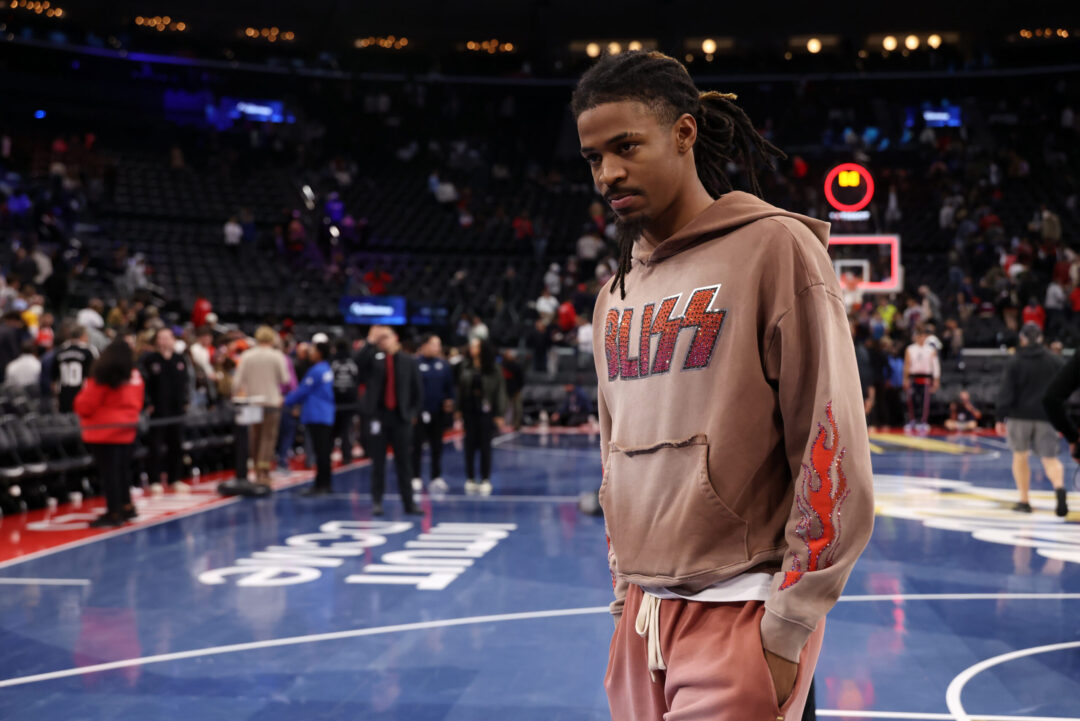
Ja Morant and Jonathan Kuminga today, Trae Young yesterday. Regardless of the official explanations, these players are not taking the floor for reasons that do not appear to be tied to genuine injuries. And the issue cuts straight to the credibility of the NBA.
Yet with the introduction of the 65-game rule (a move also criticized by Giannis Antetokounmpo) and the safeguards built into the latest Collective Bargaining Agreement (CBA), fans were assured that voluntary absences disguised as physical issues would no longer be part of the league.
That promise now looks unfulfilled.
Ja Morant and Jonathan Kuminga are currently listed as unavailable while waiting to see whether another franchise is willing to invest in them on the market, after both publicly expressed dissatisfaction with the teams that drafted them.
At the same time, the very 65-game rule risks producing a paradoxical side effect: individual awards and All-NBA teams that are not truly representative, with superstars like Nikola Jokic, Giannis Antetokounmpo and Victor Wembanyama potentially excluded due to real and well-documented injuries.
But the core issue lies elsewhere. The NBA risks losing credibility precisely as the trade deadline approaches, while the controversy surrounding the rule lingers in the background, never fully resolved.
Trae Young, first on the list
Trae Young has already faded into the background, and that is almost inevitable: the NBA news cycle moves at such speed that even the latest breaking stories quickly become old.
As is well known, Young was traded to Washington, moving directly from the Hawks’ injury list to the Wizards’ injury report. As of now, there is no official debut date.
The unofficial reason is widely understood: Washington holds a top-eight protection on its draft pick and wants to preserve it. Improving the record too much would risk sending the pick to the Knicks, due to previous trade agreements.
Regardless of how much Young might realistically impact the team’s performance, the feeling is that once the trade was completed, the player was kept on the sidelines as a precaution, justified by an injury that has never been fully clarified.
The reported issue is a quadriceps contusion, suffered on an unspecified date, which had already sidelined him for the final six games with Atlanta. A diagnosis vague enough to appear instrumental in managing an ongoing negotiation, seemingly in alignment between player and franchise.
The Ja Morant and Jonathan Kuminga cases
Different origins, identical effects. Ja Morant and Jonathan Kuminga are both at odds with their respective franchises, have expressed a desire to be traded, and in return have received fairly explicit openness to accommodate that request.
In Morant’s case, off-court history matters, but what is most concerning is his disengaged and unproductive on-court play, clearly at odds with coach Iisalo’s system.
The former 2020 Rookie of the Year has alternated between availability and the injury list. He traveled with the team to Berlin for the European games – likely for sponsorship and image reasons – but did not play in the first matchup.
Shortly before, he had a very public altercation with a teammate in practice, showing no obvious physical issues, then appeared active on the bench during the loss to Orlando. Officially, he has been out since January 2 with a calf contusion, but the sense is that neither he nor the franchise is particularly eager to see him back on the court.
The Kuminga situation is different, but no less problematic. The paradox is clear: the less he plays, the more his trade value drops, making it hard to believe Golden State truly wants to penalize him.
It seems more plausible that Steve Kerr has lost faith in his fit within the system. Kuminga has struggled both offensively and defensively, and the coach has never hidden a certain skepticism toward him – now increasingly explicit.
There are also questions about professionalism and attitude, harder to verify but now widespread. Doubts that complicate both a summer move and an immediate trade, and that the Warriors’ management has arguably amplified.
Kuminga has also been sidelined since January 2, officially due to a vaguely explained lower back issue, despite having already fallen out of the rotation even when listed as available.
What can the NBA do?
Whether this is player-driven pressure or a cautious strategy by franchises, the risk is clear: normalizing absences that are not fully justified ahead of a trade.
This is not entirely new – the Anthony Davis precedent in New Orleans in 2018-19 remains emblematic – but today the CBA provides concrete tools for investigation and punishment.
The issue goes beyond the 65-game rule, which in this case plays only a marginal role: these players are not competing for individual awards that would directly affect their contract leverage.
However, Young and Morant fall into the category of “star players”, and as such cannot remain sidelined for extended periods without credible explanations, in order to protect fans and the integrity of the NBA product.
This need is further reinforced by the recent crackdown following the betting scandal, which demands greater transparency in reporting absences.
The league has already fined the Sixers and Cavaliers for similar violations this season. The same principle should apply here if these situations extend beyond the bounds of plausibility.
The paradox is obvious: if Young remains out until after the Los Angeles All-Star Game, a franchise leapfrogged by the Wizards in the Lottery could challenge what would look like an openly calculated approach – however difficult it might be to prove.
If the NBA truly wants to protect consumers – the fans who pay for a quality product – it must act now. Otherwise, the message will be clear: in the future, even a minor ailment will be enough to justify weeks of missed games while waiting for a trade, without real consequences.