Why Victor Wembanyama Deserves the 2026 NBA MVP
Kevin O’Connor breaks down the 2026 NBA MVP race and explains why the numbers alone are not enough: Wembanyama makes the difference exactly where statistics fall short



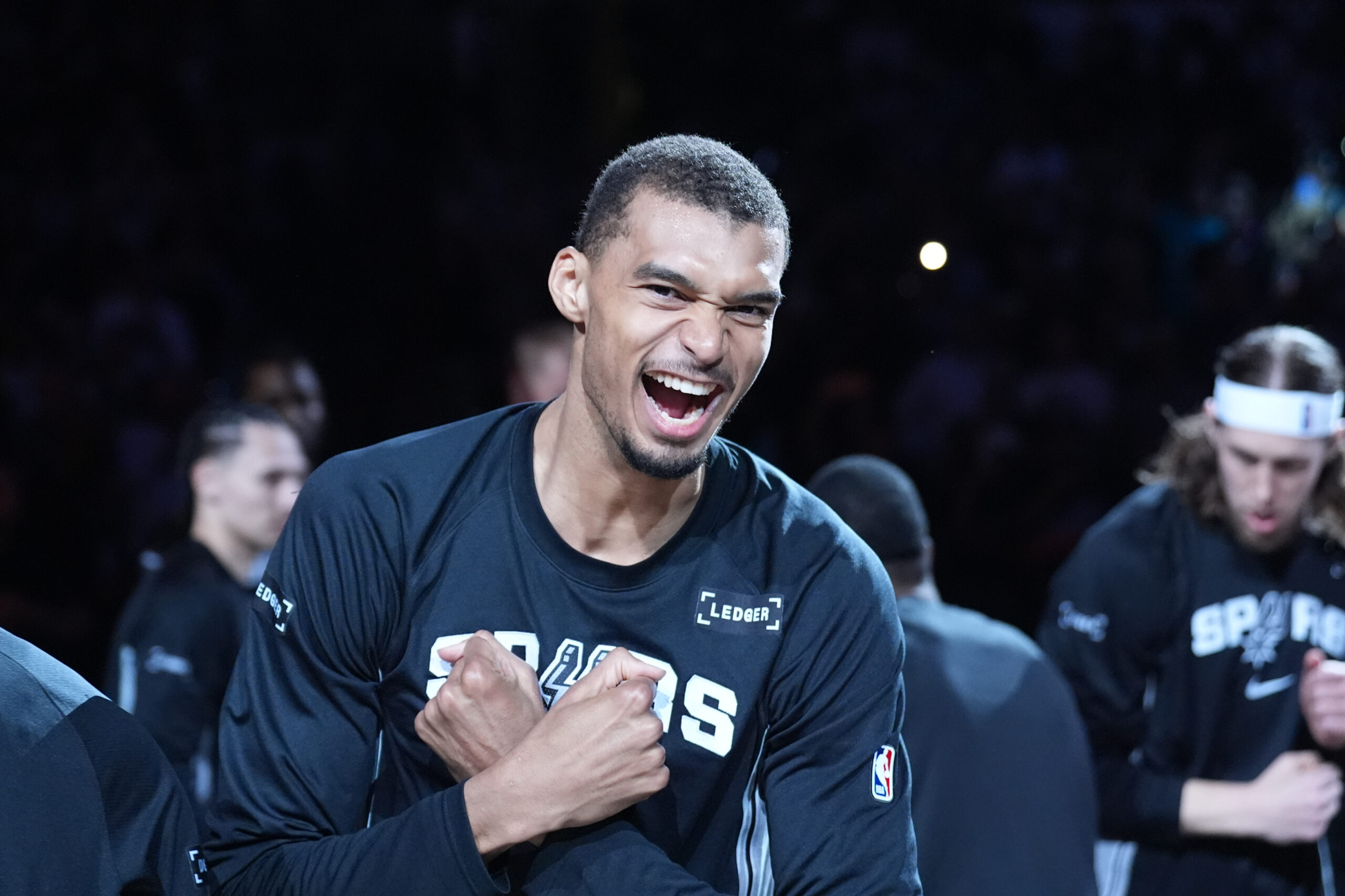
It was supposed to be a formality. The classic textbook case: best player, best team, dominant season. End of story.
Except it wasn’t.
In his analysis for Yahoo Sports, Kevin O’Connor explains why the 2026 NBA MVP race has become one of the most complicated in recent years. Not because of a lack of candidates, but for the opposite reason: two completely different ways of dominating the game.
The Key Question: What Don’t the Stats Tell You?
O’Connor’s starting point is far from trivial:
How much do you trust what the box score doesn’t tell you?
Kevin O’Connor
It is a question that completely shifts the perspective. Because, as the analyst points out, comparing Shai Gilgeous-Alexander and Victor Wembanyama is not simply about numbers.
One carries his team in the most visible way possible. The other does it in ways the box score doesn’t even have language for
Kevin O’Connor
That is where the real divide begins.
Shai Gilgeous-Alexander: The Perfect Traditional MVP Candidate
Shai Gilgeous-Alexander finished the season averaging 31.6 points per game on 66.5% true shooting – the second-most efficient 30+ PPG season ever, trailing only Stephen Curry’s 2015-16 campaign.
In O’Connor’s breakdown, Shai’s case is nearly untouchable.
- Leader of a 64-win Thunder team
- Reigning champion and Finals MVP
- Over 31 points per game with absurd efficiency
The case for Shai should be as clean, simple, and airtight as possible
Kevin O’Connor
His streak of 140 straight 20-point games broke a Wilt Chamberlain record that had stood for 63 years. His teammates shoot better when he is on the floor: Chet Holmgren by 9.2%, Luguentz Dort by 6%, Ajay Mitchell by 5.1%. He is not just a scorer – he is an engine that creates quality offense for everyone.
Even defensively, contrary to the stereotype around high-usage guards, SGA sets the tone. The Thunder did not have the league’s best defense in spite of him – they had it in part because of him.
A “traditional” MVP in the fullest sense of the term.
The Variable That Changes Everything: Victor Wembanyama
And yet, as O’Connor notes, one factor disrupts the equation:
Then there’s a guy named Victor Wembanyama
Kevin O’Connor
For O’Connor, the first argument is simple:
Wembanyama is the most dominant defender since Bill Russell
Kevin O’Connor
An heavy comparison with Bill Russell – but one backed by both film and data.
- Elite rim protection
- Opponent efficiency dramatically reduced
- Defensive impact that changes offensive decision-making
With Wembanyama on the floor, the Spurs post a 103.2 defensive rating. Without him: 113.4. A 10.2-point differential, the highest in the league by a wide margin. Opponents shoot 8.7% worse when he is the closest defender. More telling still: opponents attack the paint on just 40.1% of possessions with him on the floor, versus 48.4% without him.
That 8.3 percentage-point swing dwarfs the marks posted by previous Defensive Player of the Year winners – Rudy Gobert peaked at 3.5% during his four award seasons.
This is not just shot-blocking. It is pure deterrence.
Beyond the Numbers: Wembanyama’s Real Value
But the heart of O’Connor’s case goes even deeper.
He puts up incredible offensive numbers, but his most valuable contributions are the ones the box score refuses to recognize
Kevin O’Connor
That includes everything traditional stats miss:
- Drawing help defenders and double teams
- Creating open shots for teammates
- Reshaping opposing defensive structures
- His offensive “gravity”
Defense is only half the story. Offensively, the Spurs post a 120.5 offensive rating with Wemby on the floor – nearly identical to the Thunder’s 121.5 with SGA. What makes it remarkable is how he gets there. Wembanyama pushes in transition like a wing, comes off screens like a guard, and spaces the floor like a stretch big. His presence creates 12.3 corner threes per game for San Antonio – the highest mark in NBA history – often without even touching the ball.
His teammates’ efficiency spikes with him: Devin Vassell true shooting rises from 55.2% to 60.8% with Wemby on the floor, Harrison Barnes jumps from 58.0% to 64.7%. And his gravity creates more rim pressure for others: Dylan Harper: +15.5% rim attempts, Stephon Castle: +14.2%, De’Aaron Fox: +9.7%. None of that appears in Wembanyama’s box score.
Put simply: Wembanyama doesn’t just generate offense – he warps it.
An MVP Race Turned Into a Weekly Duel
O’Connor describes the final month of the regular season as a long-distance battle between two superstars:
It was a constant ‘can you top this?’ between a Canadian assassin and a French alien
Kevin O’Connor
SGA leads in the most visible way basketball allows: ball in hand, points on the board, clutch shots going viral. Wemby leads in ways the box score cannot describe: defensive gravity that empties the paint, offensive gravity that fills it with defenders, spacing created without touching the ball.
Wembanyama finished with the league’s best on/off differentials, was by far the NBA’s best defender, produced elite raw offensive numbers, and still has his most valuable contributions go statistically untracked. In a race this close, that is the separator.
A perfect summary:
- Shai → control, efficiency, precision
- Wembanyama → uniqueness, total impact, unpredictability
Jokic Third, Others Worth Mentioning
Nikola Jokic finishes third in this ballot. Three-time MVP, averaging 28/13/11, still operating at an offensive peak. But the Nuggets finished among the league’s bottom 10 in defensive rating, and Jokic’s defensive impact – diminished after a December knee injury – fell below prior standards. In a race this tight, every edge matters.
Jaylen Brown carried Boston to the No. 2 seed after summer roster losses and without Jayson Tatum for much of the season: an outstanding year, but not podium level. Luka Doncic and Cade Cunningham also delivered elite seasons, but could not crack the top three. All would have had stronger cases in a less crowded field. They did not – because of the extraordinary seasons from SGA and Wemby.
Kevin O’Connor’s Verdict
At the decisive moment, O’Connor leaves no room for doubt.
The choice is not simply about who played better in a vacuum – it is about which type of impact matters more.
And for O’Connor, the answer is clear:
In a race this close, that’s the difference
Kevin O’Connor
Wembanyama combines:
- Dominant defense
- High-level offensive production
- Constant influence even without the ball
That is why, in his view, Victor Wembanyama is the 2026 NBA MVP.
A Scenario Bigger Than the Present
There is one final element O’Connor subtly highlights: context.
Wembanyama is only 22 years old. He is just in his third NBA season.
Players like LeBron James, Giannis Antetokounmpo, and Kareem Abdul-Jabbar won their first MVP later in their careers.
This may only be the beginning.
And perhaps, years from now, we will look back at this season as the moment it became obvious to everyone what he has known all along:
he is “the next one”.