Haliburton on flopping in the NBA: “It’s taught to players”
Tyrese Haliburton opened up about flopping in today’s NBA, admitting that drawing fouls has become something players are taught throughout their basketball development



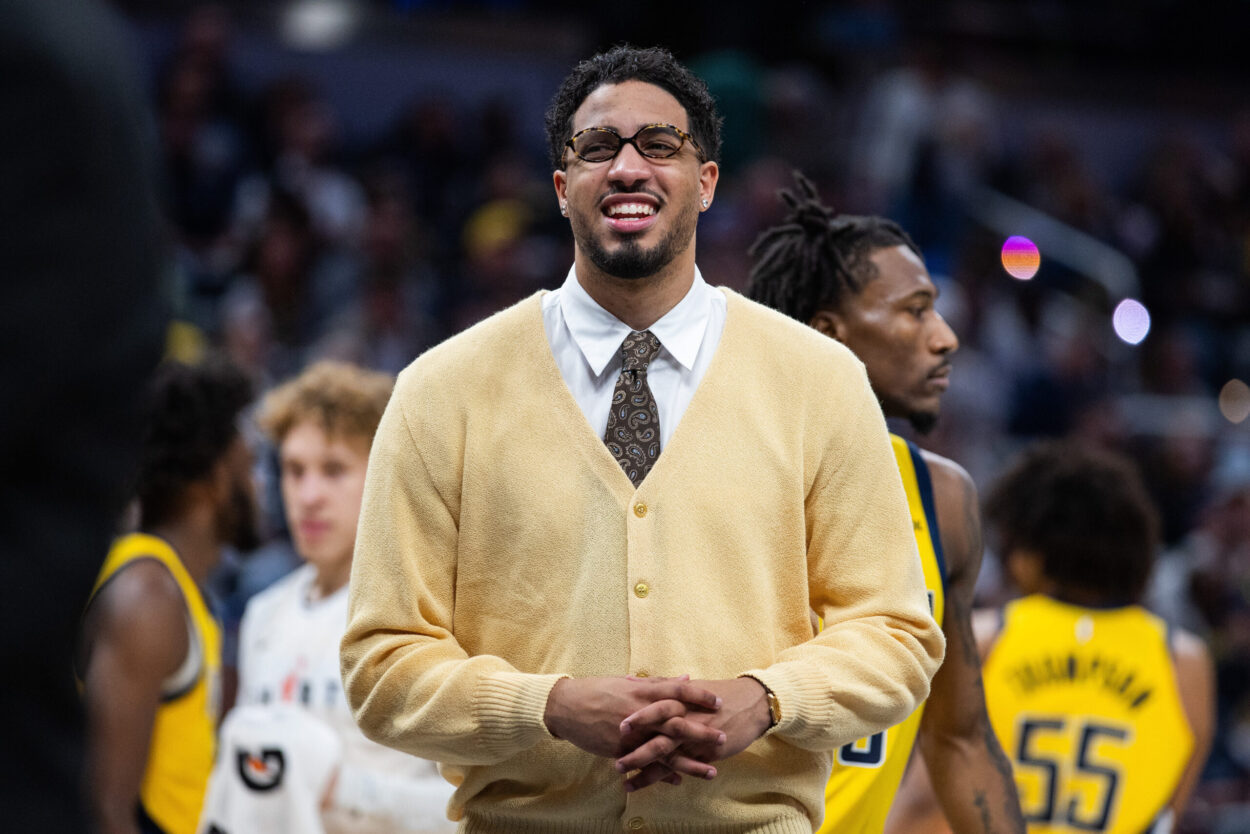
The topic of flopping in the NBA continues to divide fans, analysts and players alike. This time it was Tyrese Haliburton addressing the issue, and during a recent appearance on ESPN’s The Pat McAfee Show, he admitted quite openly that seeking contact and drawing fouls has become an integral part of how modern players are developed.
The Indiana Pacers point guard also commented on recent remarks from commissioner Adam Silver, who had discussed how some flopping-related habits are now taught to players from a very young age.
Yeah, of course it’s taught. I don’t think it’s necessarily something head coaches focus on, but more part of individual player development. And it starts before you even get to the NBA – it’s something you naturally work on
Tyrese Haliburton
Haliburton then explained how, in today’s game, getting to the free-throw line consistently has become one of the most important aspects of becoming an elite scorer.
The best scorers are usually the guys shooting the most free throws. So it makes sense that players work on it. Even in pickup games, people try to figure out how to draw fouls. It’s part of the game
Tyrese Haliburton
It’s a concept that perfectly reflects the evolution of the league. First came the dominance of the mid-range game, then the three-point revolution. Now, one of the most decisive weapons in basketball seems to be the ability to manipulate contact and generate constant trips to the line.
Over the last several years, multiple stars have pushed that aspect of the game to the extreme. James Harden, during his prime in Houston, built an almost impossible offensive system to defend thanks to the combination of his step-back jumper and his ability to draw fouls.
Today, the symbol of this new generation is Shai Gilgeous-Alexander, a back-to-back MVP and consistently among the league leaders in free-throw attempts, alongside stars like Giannis Antetokounmpo and Luka Doncic.
According to Haliburton, however, there’s still a difference between exaggerating contact and completely fooling referees.
I think NBA referees are the best in the world. You realize it immediately when you play in FIBA competitions or the Olympics. I think more than fully faking things, a lot of players exaggerate contact. But does it happen? Of course it does, and people openly talk about it
Tyrese Haliburton
And that’s exactly where the debate lies: the line between gamesmanship and entertainment is becoming increasingly thin. On one side are those who believe every era has had players capable of exploiting the rules to their advantage. On the other are fans frustrated by possessions designed more to hunt for fouls than create clean shots.
That’s the heart of the modern NBA discussion. Seeking contact has always been part of basketball, but teaching players to create it unnaturally risks taking away some spontaneity and entertainment from the game.
Still, one question remains open: are the criticisms really justified?
Probably not. Because at the end of the day, players are simply doing what the rules allow. And as long as certain situations continue to be rewarded by officials, someone will inevitably keep taking advantage of them.