Shamet and Champagnie in the NBA Finals: from role players to key contributors
From the fringes of the league to basketball’s biggest stage, the journeys of Landry Shamet and Julian Champagnie highlight the lesser-told side of the race for an NBA championship



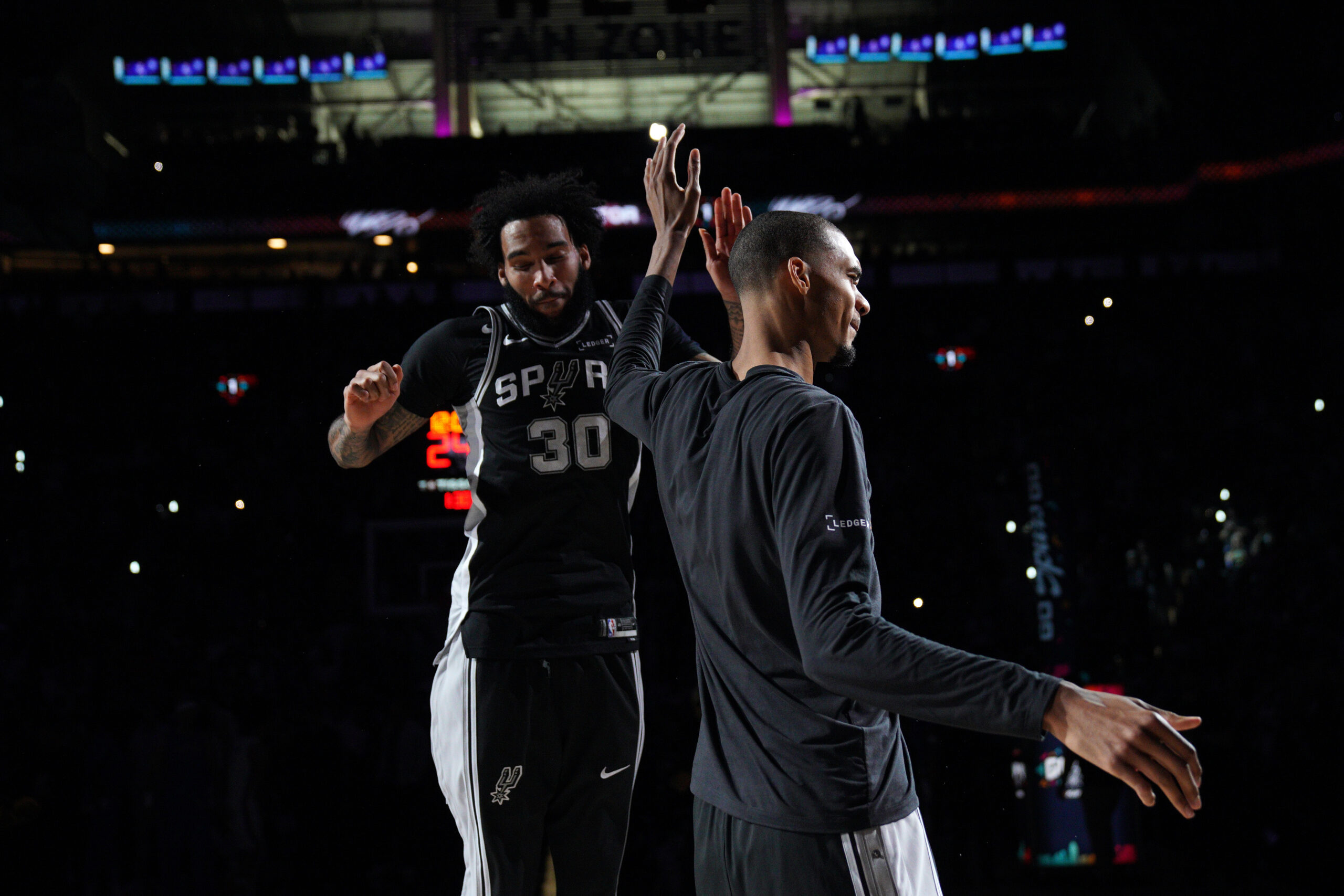
There are stories that basketball doesn’t simply tell – it builds them slowly, almost quietly, until they become impossible to ignore. They are the careers that seem suspended for years between end-of-the-rotation roles, struggling teams, and survival-level minutes. Then, suddenly, they find themselves under the brightest spotlight of all: the 2026 NBA Finals.
That’s the case for Landry Shamet and Julian Champagnie, two players who until recently were associated more with fighting for rotation minutes than with meaningful roles on a championship contender. Yet today, they find themselves in the same story, on opposite sides of the biggest stage in basketball: the NBA Finals between the New York Knicks and San Antonio Spurs.
To truly understand how they got here, you have to go back to environments where basketball was more about perseverance than ambition. Washington, for example, during some of its less successful seasons, became a crucial stop for both players – a place where talent doesn’t explode but is slowly shaped, often without much outside attention.
During that period, Landry Shamet was already a recognizable figure around the league, but he carried a label that was difficult to shake: a reliable shooter, yes, but never important enough to change a team’s hierarchy. One of those players every team wants but none builds around. In Washington, however, something clicked. He rediscovered his rhythm, developed cleaner reads, and most importantly found a more stable role playing off the ball. He didn’t become a different player – he became a more complete one.
Julian Champagnie, meanwhile, went through an even more delicate phase, one familiar to young players entering the NBA on teams that can’t afford patience. He received minutes, but never true continuity. He had opportunities to develop, but not the environment to fully measure his growth. Amid that unstable balance, however, he built his technical identity: increasingly credible lateral defense, improved rotational awareness, reliable perimeter shooting, and growing versatility. A true 3-and-D player – not born overnight, but developed over time.
Then came the moment that quietly changed the direction of both careers: the 2024-25 trade deadline. Shamet was sent to the Knicks, while Champagnie landed with the Spurs. At first, both moves were viewed more as salary-cap bookkeeping than impactful basketball decisions.
Instead, that’s exactly where their trajectories truly began to change.
In New York, Landry Shamet found a system that maximized his strengths. He doesn’t need to create. He doesn’t need to force the issue. He needs to punish. He’s the shooter who stretches the floor when defenses collapse on Jalen Brunson and Karl-Anthony Towns, the player who turns a defensive help rotation into a fatal mistake. Everything is about timing, positioning, and simple but deadly reads.
In San Antonio, Julian Champagnie joined a project built around a clear gravitational force: Victor Wembanyama. Here, his value isn’t measured by touches but by the space he helps create. Every open shot, every defender pulled away from the paint, every possession that becomes easier to read is part of a larger ecosystem. He’s not the star, but he’s so functional to the system that he has become indispensable.
Their numbers during the 2026 NBA Playoffs do not tell a superstar story, nor should they. They tell something more subtle: reliability in key moments, discipline within a role, and an impact that isn’t always immediately visible but can be felt in the flow of a game.
Throughout the playoff run, Landry Shamet became a constant presence from beyond the arc, one of those players defenses simply cannot ignore, even for a single possession. In Game 1 of the Finals against the Spurs, he delivered a solid and clinical performance: 13 points, three three-pointers, and, above all, shot selection that mattered more than the box score. He didn’t force anything, never drifted outside the system, and punished every defensive hesitation.
On the other side, Julian Champagnie answered with a less visible but equally important impact. His presence alongside Wembanyama changes the Spurs’ offensive geometry, forcing defenses to choose what they are willing to concede. And in the NBA Finals, choosing wrong often means losing.
In the end, this series isn’t only about stars and legendary numbers. It’s about players who found the right place at the right time after years in which that place seemed not to exist. And in basketball, sometimes that is exactly the line between remaining on the margins and becoming part of history.