Sam Presti does it again: Nuggets and Spurs feel the fallout
With a series of salary cap moves, Sam Presti managed to cut the Oklahoma City Thunder’s payroll while simultaneously making life much more difficult for the Denver Nuggets and San Antonio Spurs



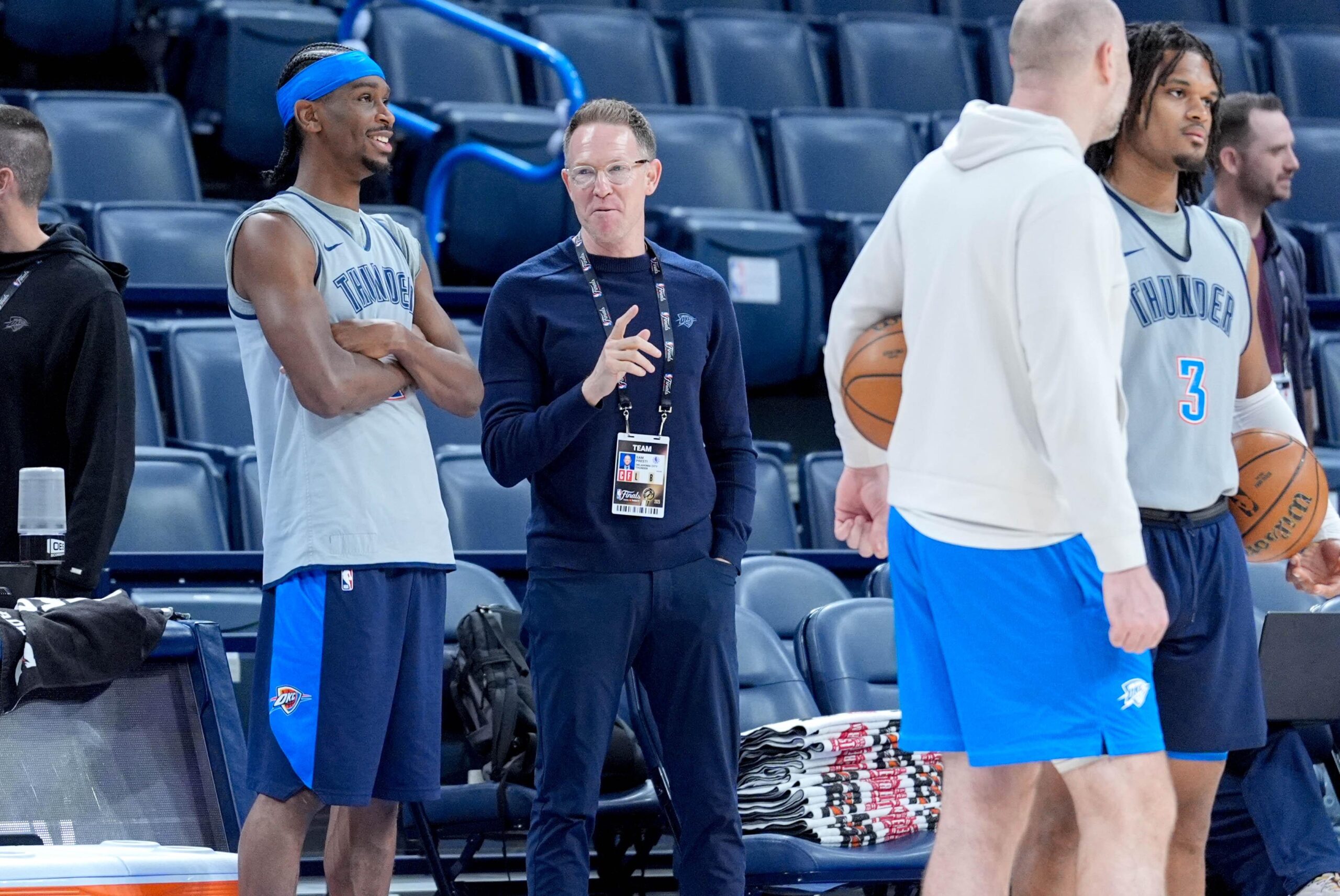
Every summer, it’s the same story: Sam Presti is hailed as the NBA’s most brilliant general manager, and every summer he finds a new way to prove why. This time, his masterpiece came while the Oklahoma City Thunder were simply trying to save money. The result? The Denver Nuggets and San Antonio Spurs are now dealing with major new headaches.
The Spencer Jones offer
It all started with what looked like a harmless move: a two-year, $12 million offer for Spencer Jones, the Denver Nuggets forward who entered restricted free agency. On paper, it wasn’t a blockbuster. For Denver, however, it created a difficult dilemma: let Jones walk for nothing or match the offer and push themselves straight into the dreaded second apron.
The Nuggets chose to keep him. Now they’re paying the price.
The real problem is Peyton Watson
With Denver already above the second apron, the situation surrounding Peyton Watson – also a restricted free agent seeking a contract worth roughly $28 million per season – has become extremely complicated.
Salary cap analyst Yossi Gozlan explained the situation bluntly:
The main consequence is that the Nuggets can’t receive players under contract in a sign-and-trade for Peyton Watson while they’re above the second apron. They would first have to get below that threshold through another transaction, or do it simultaneously as part of the trade
Yossi Gozlan
In other words, Denver has very little flexibility. If the sides can’t agree on a long-term extension or construct the right trade, Watson could decide to sign his $6.5 million qualifying offer, which would drive the Nuggets’ luxury tax bill even higher.
OKC needed to cut costs too, but Presti found the answer
Ironically, Oklahoma City entered the offseason with a similar challenge. The massive new contracts for Jalen Williams and Chet Holmgren had significantly increased the team’s payroll, prompting ownership to ask Presti to reduce expenses.
His response was a series of calculated moves:
- Aaron Wiggins traded to the Atlanta Hawks
- Isaiah Joe traded to the Detroit Pistons
- Luguentz Dort, after his team option was exercised, also dealt to the Hawks in exchange for three second-round picks
In return, the Thunder mostly acquired draft capital. Strengthening the roster wasn’t the goal – financial flexibility was. The moves dropped Oklahoma City $6.9 million below the second apron, reducing its projected luxury tax bill from roughly $160 million to under $20 million.
A move that also hurts the Spurs
That’s where the ripple effects begin.
By sending Dort and Wiggins to Atlanta essentially for second-round picks, the Thunder also made the Hawks a more competitive team.
Why does that matter for the San Antonio Spurs? Because San Antonio owns Atlanta’s 2027 first-round pick, acquired in the Dejounte Murray trade back in 2022. If the Hawks improve thanks to Oklahoma City’s additions, that draft pick could end up being significantly less valuable than originally expected – a frustrating outcome for the Spurs, especially after knocking the Thunder out in the 2026 Western Conference Finals.
Did Sam Presti plan it all?
It’s impossible to know whether every consequence was planned down to the smallest detail. But the end result speaks for itself: Presti dramatically reduced Oklahoma City’s financial burden, preserved long-term flexibility, complicated Denver’s salary cap situation, and diminished the value of one of San Antonio’s key future draft assets – all within a matter of weeks.
The Thunder may have sacrificed something on the court by moving Dort, Wiggins, and Isaiah Joe, but from a front-office perspective, Presti once again reminded the NBA why he’s widely regarded as one of the league’s most brilliant executives.